
Game Development Schools Part 1
Yes, there are schools that teach game development. Come inside to get an idea of what they have to offer.
- Schools? What Schools?
- Digipen | Full Sail
- So what will I learn?
- What about regular college?
- Things to look for.
- Final Thoughts
- School Index
[size="5"]Schools? What Schools?
Yes folks there are Game Development Schools. I will provide links to all of the schools I mention in this article in the final section, just in case anyone wants to take a look at them. Currently, there are 2 places in the United States that are offering Full Game Development Programs, and there are a few other 4-year universities that offer either classes on game development, or game development clubs. The two colleges in the United States offering Game Development programs are Full Sail (located in the Orlando area of Florida) and DigiPen (located in Redmond Washington). From what I have seen, both of these schools offer great programs, but they both have advantages and disadvantages of which I will address later. Other 4 year universities such as the University of North Texas offer game development clubs which students can participate in. Canada also has a few schools offering Game Development programs. NAD Centere 's (located in Quebec) Game Design program looks fairly promising. And so doesn't L'Institut d'informatique de Quebec's programs (though you have to read French to see these). There are also 2 other game development schools that aren't even located on this continent. One is called the School of Computing at Middlesex University (located in London U.K.). And Ngee Ann Polytechnic (located in Singapore). All of these schools look quite promising but you'll have to assess them for yourselves.
[size="5"]DigiPen | Full Sail
I am going to focus on DigiPen and Full Sail here but the info I give can be applied to any of the above schools. Below you will find a listing of what each of the two schools offer.
| DigiPen | Full Sail |
| A 2 Year Associates Degree which will take 2 years to get or a 4 year BS in 4 years | A 2 year Degree in Game Design which will take 1 year to get |
| Macintosh/SNES console programming. | Windows/Linux platform Programming. |
| Very strict Admissions Policy. | Very High Quality Development systems (Intergraph, Silicon Graphics, Macintosh etc...) |
| Cost of attending is fairly cheap. | Very expensive |
| Operates 24 hrs a day 7 Days a Week. |
[size="5"]So what will I learn?
Well, these Game Design programs are redesigned every few months because the current industry moves so fast. The educators need to adapt in order to supply the market with quality workers. But here is a list of the classes offered at both DigiPen and Full Sail.
| DigiPen (2 year program) | Full Sail |
| Geometry | Introduction to Media Arts |
| Algebra | General Design Fundamentals |
| Computer Environment | Networks and Operating systems |
| Operating System 1 | C++ |
| High level programming 1 | Physics and Math |
| Project Introduction | Digital Technologies and Techniques |
| Calculus and Planar Analytic Geometry | Game Interface Design and Theory |
| Operating System 2 | Rules of the Game |
| High Level programming 2 | Structure of Game Design |
| Game Implementation Techniques I | Real Time 3d Modeling |
| Project 1 | Multiplayer Network Gaming |
| Solid Analytic Geometry | Artificial Intelligence |
| Calculus 2 | Asset Production |
| Computer Graphics 1 | The Gaming Project |
| High Level Programming 3 | |
| Game Implementation Techniques II | |
| Project 2 part 1 | |
| Computer Graphics 2 | |
| Computer Networks 1 | |
| Computer Networks 2 | |
| High Level Programming 4 | |
| Data Structures | |
| Project 2 part 2 |
[size="5"]What about regular college?
Why is it that a little piece of paper can get you through the door at so many companies? Simple - it shows that you have the persistence, the will, and the "Smarts" to make it through college and get a degree. It also shows that your thoughts aren't just limited to computer science because you've had to take classes such as Sociology, Psychology, Philosophy, etc. This makes you a well-rounded person and helps you fit in better in the workplace. So by no means am I telling all you wonderful people to drop out of college or go to any of the Game Degree schools right out of high school. Large Corporations like to see that their employees are educated and often require at least a B.S. in some field before they will hire you. So it may be a good idea to get a 4-year degree, and then go to a Game Development school if you can't find a way into the industry.
[size="5"]Things to look for...
Here I am going to talk a little bit about things you need to take into consideration before deciding on a school.
- Ask yourself "What am I going to get out of this?".
- If you're looking at a game development school, make sure to ask them how long they have been running their game development program. I once looked at a school that had a game design program; however, one year after the program started, they canceled it and all of the people who started classes got shafted.
- What kind of equipment am I going to learn on? It's true that you should always optimize for slower computers, but that doesn't mean you should learn how to design games on a year old computer. By the time you get out of school and are ready to start working, those computers you've been working on are going to be even more out of date than what you started with, imagine if they had been 2 year old computers!
- Find out what the job placement rate is.
- What programming languages are you going to be learning? (C and C++ are a MUST, Java would be useful, and so would Delphi).
- Take a look at the school, while you're there - go around town and ask people if they've heard of the school & see what they think of it. You can get some of the most honest opinions out of complete strangers.
- The final bit of advice I can give is this. Ask yourself the following question when you visit the school. "Can I picture my self here? Are there others like me here? Will I fit in?". This question is one most people never ask when looking at colleges, but it is one of the most important. If your not happy at school then your grades will suffer, your attitude will deteriorate, and you will be miserable.
[size="5"]Final Thoughts.
I decided to add this section in order to do a little ranting, as well as help people out. About a week ago, I was informed that 50% of the students in the Game Design program at Full Sail were dropping out because the courses were too difficult. At first I got a bit nervous, then I started wondering why. I came to the conclusion that it was 1 of 2 reasons.
#1. The Game Design Program is of such quality that only the cream of the crop is able to pull through.
OR
#2. The classes in the Game Design program aren't doing a good job at teaching the students what to do; therefore, they are failing miserably.
After a careful consideration, and a watchful eye, I came to the conclusion that the reason people were quitting was because they had a misconceived idea of what they wanted and they didn't apply themselves. It's so easy to forget about tomorrow's homework assignment when you've been out partying all night, or just don't feel like doing the work because it's "not what you want". Folks, if you're looking into any college, just make the realization that wasting your time there, getting mediocre grades, and partying all night/every night amounts to buying a brand new car every year. In 1, 2, or 4 years time you've paid out (or have to start paying back) all that money for a product that you've only partially used! So when you make a decision on where you want to go, take the steps to achieve that goal, or you've just wasted all that money for nothing else than a piece of paper with your name on it. Sure, it will get you in the door, but it's your knowledge of a subject that gets you hired - not a piece of paper.
Good luck in your endeavors.
[size="5"]School Index
FULL SAIL (http://www.fullsail.com)
DigiPen (http://www.digipen.edu)
University of North Texas (http://hercule.csci.unt.edu/larc)
L'Institut d'informatique de Quebec (http://www.iiq.qc.ca/)
NAD Centere (http://www.nad.qc.ca/)
School of Computing at Middlesex University (http://www.cs.mdx.ac.uk/cg/)
For more Game Development related schools that are kept fairly up to date, check the schools directory on GameDev.net, or Gamasutra (under the Directories section, search for schools).
[Editor's note: This article was written in 1999, and not surprisingly, some of the information is out of date. For current information on each schools' game development programs, please check the respective websites.]
Related Tutorials

Tutorial on creating snow Post Process with UE
Tutorial on creating snow fog with UE You can get more info here! https://www.youtube.com/channel/UC6FyDBid7cF9Ll3004O…
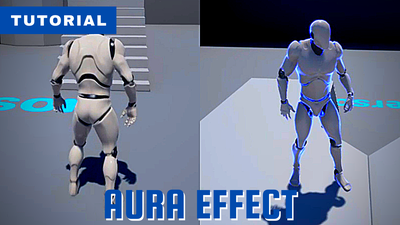
How do you create an aura effect? Look at this!
How do you create an aura effect? Look at this! We are constantly making Unreal Engine tutorials. I hope it will be he…
A/B Testing HTML5 Games
This is a brief tutorial demonstrating how to use Google Optimize's server-side a/b testing technology to learn how to …

How to Prepare a Game for Localization? Basic Rules
A list of rules for developers to keep in mind in order to get ready for localization. Key internationalization princip…
 Alconost

Game Design User Experience Best Practices // Ultimate Guide
Top best practices and pro-tips for common game mechanics you should implement in your mobile games: The ultimate guide…
 Amir Dori

7 UX Lessons From The Trenches
In showcasing my team's game at a few game events, we learned a few lessons on UI and condensed them into a simple, pra…
 Jason Davey
Discussion
More from Joseph Fernald
Comparing Shadow Mapping Techniques with Shadow Explorer
New Incentives and a Whole New Platform From The Intel AppUp developer program
The final installment in this series on Intel's AppUp program details additional incentives and opportunities for devel…
The Game Maker
This book excerpt contains the first chapter of the book that introduces beginning game developers to the Game Maker pr…
Discussion